IN THIS ARTICLE
Mortgage Escrow, Minus the Manual: Why Banks Need a Rules Engine, Not a Spreadsheet
Sarah manages mortgage escrow for a regional bank that services over 14,000 loans. On any given day, she's tracking property tax deadlines across six states, insurance premium payments for three different carriers, and flood insurance requirements that vary by county. Her team processes roughly 1,200 disbursements monthly.
Her primary tool? Excel.
Not because the bank can't afford better technology. But because their core banking system treats escrow like a savings account with extra steps, and nobody's figured out a better solution.
Until something goes wrong. A missed tax deadline that triggers penalties. An insurance lapse that forces the bank into force-placed coverage at 3x the cost.
The Spreadsheet Economy of Mortgage Escrow
Your core system stores escrow balances and processes payments. For standard scenarios—straightforward annual tax bills, simple insurance renewals—it might even work automatically. But the moment you encounter anything outside the happy path, you're back to manual intervention.
And in mortgage escrow, everything is outside the happy path.
Property taxes that bill quarterly instead of annually. Insurance companies that changed their payment terms mid-year. Counties that split tax assessments between municipal and school district bills. Borrowers who paid taxes directly and need escrow adjustments. Flood insurance requirements triggered by FEMA map changes.
None of this is rare.
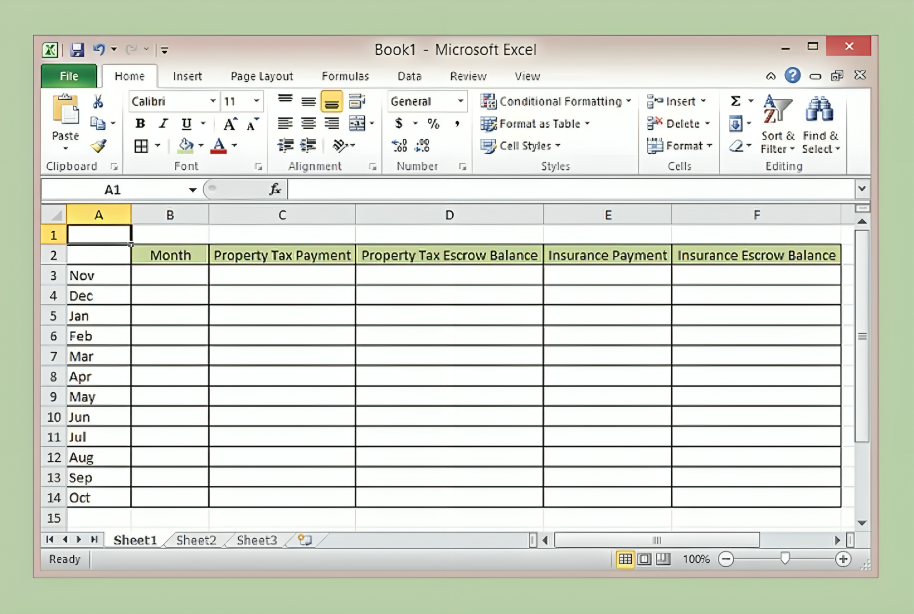
So servicing teams build workarounds. Spreadsheets that track upcoming disbursements. Shared calendars with payment deadlines. Email folders organized by tax jurisdiction. The entire infrastructure of "things we have to remember because the system won't."
These workarounds work until they don't. A staff member leaves and takes their institutional knowledge with them. Volume increases and something falls through the cracks. A spreadsheet formula breaks and nobody notices until reconciliation doesn't balance.
Core banking systems are built to handle accounts, not orchestrate complex, conditional workflows across multiple external parties with state-specific compliance requirements. They can store data and process transactions, but they can't encode the business logic that says "if the Cook County tax bill hasn't arrived by November 15th, escalate for manual review."
That business logic has to live somewhere. In most banks, it lives in Sarah's head and her team's shared spreadsheets.
What to do
Rules engines change this. Instead of training humans to remember complex conditional logic, you codify that logic in a system that applies it automatically to every transaction.
Tax disbursement rules: "For properties in Cook County, IL: first installment due March 1st with grace period through March 30th. If bill not received by February 15th, contact county treasurer. If balance insufficient, notify borrower 45 days before due date per state requirements."
That's executable logic the system enforces automatically for every loan in Cook County. When Cook County changes their due dates, you update the rule once and it applies to all affected loans immediately.
Insurance verification rules: "Upon policy renewal: verify premium amount matches carrier notification. If increase exceeds 10%, validate and notify borrower per RESPA timeline. If no renewal notice received within 45 days of expiration, contact carrier. If policy lapses, initiate force-placed coverage within 15 days."
Escrow analysis rules: "Calculate required balance monthly. If projected shortage exceeds $500, determine adjustment and notification requirement. If surplus exceeds $50, calculate refund. Apply RESPA timing requirements. Document calculation methodology for audit trail."
The rules engine doesn't just do the math—it understands the regulatory requirements, applies the correct logic based on loan characteristics, and creates the audit trail regulators expect to see. Rules are enforced consistently every single time, regardless of workload or staff experience.
The Auditability Problem Nobody Talks About
If a regulator asked your escrow team to document exactly why you made a specific disbursement decision six months ago, how long would it take?
Rules engines make auditability automatic. Every decision—why a payment was made, why it was delayed, why an exception was triggered—is documented with a complete trail showing which rule was applied, what data informed the decision, and when it happened. Not because someone remembered to document it, but because the system can't execute the rule without creating the record.
When regulators show up, you pull reports showing exactly what happened and why. The audit trail is generated as a byproduct of normal operations.
Why This Isn't About Replacing Your Core
Your core banking system is excellent at maintaining ledgers, processing transactions, and storing account data. It's the system of record for escrow balances, and it should stay that way. But expecting it to also handle complex conditional logic, multi-party workflow orchestration, and jurisdiction-specific compliance rules is like expecting your accounting software to also be your CRM.
Solutions like the Hudson Contractual Management Platform layer on top of your existing core. The core continues to hold escrow balances and process transactions. Hudson's rules engine reads the transaction requirements, determines what needs to happen based on loan characteristics and regulatory requirements, and orchestrates the workflow automatically..
Same data, completely different level of intelligence.
What Good Escrow Operations Look Like
The standard most banks should be measuring against:
Routine disbursements happen automatically. Your team reviews exceptions, not routine transactions.
Compliance is encoded, not memorized. RESPA timing requirements and state-specific regulations exist as rules the system enforces.
Exceptions are caught early. Unusual tax increases, missing insurance renewals, projected shortages get flagged immediately.
Audit trails are automatic. Every decision has complete documentation, available instantly for regulatory review.
Scaling doesn't require headcount. When your portfolio grows, automation scales with it.
Your escrow operation is either a competitive advantage or an operational risk. Rules engines are how you make it the former instead of the latter.